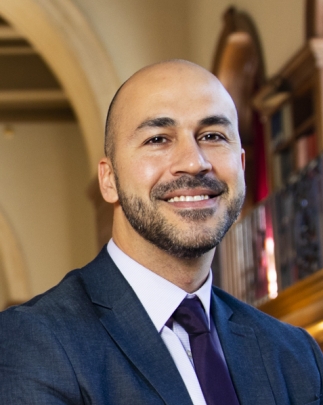
Gary Colwell on “Is There A Future For The Philosophy of Religion?”

Gary Colwell is Professor Emeritus of Philosophy at Condordia University of Edmonton. We invited him to answer the question “Is there a future for the philosophy of religion?” as part of our “Philosophers of Religion on Philosophy of Religion” series.

Thesis: As long as there is a future with a sufficient number of humans philosophy of religion will have a future.
(For, if there is no future, nothing has a future; and if there are no humans, no human endeavour has a future; and if there is not a sufficient number of humans philosophy of religion may not be one of the human endeavours.)

Definition PR: Philosophy of Religion is philosophical thinking about a religion.
(Briefly, it’s questioning the foundations of religious belief; i.e., deep questioning involving analysis and synthesis. PR is here taken to refer to a human cognitive activity, one not limited to the requirements of an academic course titled “Philosophy of Religion.”) Continue reading

Disturbing the Definite Article: Taking “The” out of Institutionalized Philosophy of Religion – Nathan Eric Dickman

Nathan Eric Dickman (PhD, The University of Iowa) is an associate professor of philosophy at the University of the Ozarks. He researches in hermeneutic phenomenology, philosophy of language, and comparative questions in philosophies of religions, with particular concerns about global social justice issues in ethics and religions. He has taught a breadth of courses, from Critical Thinking to Zen, and Existentialism to Greek & Arabic philosophy. His book titled Using Questions to Think (Bloomsbury, 2021) examines the roles questions play in critical thinking and reasoning, his book titled Philosophical Hermeneutics and the Priority of Questions in Religions (Bloomsbury, 2022) examines the roles questions play in religious discourse, and his book titled Interpretation: A Critical Primer (Equinox, 2023) examines the role of questions in the interpretation of texts. We invited him to answer the question “Is there a future for the philosophy of religion?” as part of our “Philosophers of Religion on Philosophy of Religion” series.

Sometimes critics are accomplices. Many critics misrecognize that we contribute to the very creation of the object about which we have objections! This is the case with many recent challenges to what has passed for “the philosophy of religion” over the last forty years or so. That is, critiques posed by scholars in the last twenty years create and bolster, rather than re-envision or expand, so-called “the” philosophy of religion. Consider, for example, the call for contributions to this discussion. As DuJardin writes, “The business of evaluating religious truth claims and beliefs, once our meat and potatoes, is now thought to be fraught with bias and ideology…” When was this “once”? I think the primary impetus was Plantinga’s faith-based epistemological rhetoric influential in the 1980s and through the 1990s (Schilbrack 2014, p. 200). However, before that—and happening concurrently throughout the last four decades—many philosophers have examined religions and developed religious philosophies in hermeneutic, feminist, and other terms. What of Ricoeur’s approach to the symbolism of evil, for example (1969)? Or, Irigaray’s philosophies of divine women (1993) and Pamela Sue Anderson’s feminist philosophy of religion (1998)? Or, Nasr’s perennialist approach to comparative religions (2006)? Or, Nishitani’s philosophical developments of shunyata (1983)? Or, Tillich’s analysis of the truth of religious language (1957)? I could go on, but I highlight these as some among many philosophies of religions that are rarely mentioned within institutionalized philosophy of religion or even by recent critics of it. Continue reading

Robert C. Roberts on “Is There A Future For The Philosophy of Religion?”

Robert C. Roberts is Professor Emeritus at Baylor University. We invited him to answer the question “Is there a future for the philosophy of religion?” as part of our “Philosophers of Religion on Philosophy of Religion” series.

I am not a professional philosopher of religion, and am not up to date in my reading in the field. I am writing in response to an invitation from the editors, who apparently think some remarks will be of interest to the blog’s readers. Many of the questions the editors posed as topics of a possible blog post are ones I am unqualified to address.

I am not a philosopher of religion, but I am a Christian, am a philosopher of sorts, and write about Christian topics, especially topics in Christian ethics and moral psychology. I taught philosophy in philosophy departments from 1973 to 2015. I’ll take this opportunity to describe for you what I do by way of applying philosophy to the religion that I know something about. Continue reading

Roger Trigg on “Is There A Future For The Philosophy Of Religion?”

Roger Trigg was the Founding President of the British Society for Philosophy of Religion, and is a Past President of the European Society for Philosophy of Religion. His latest book is Monotheism and Religious Diversity (Cambridge University Press, 2020). We invited him to answer the question “Is there a future for the philosophy of religion?” as part of our “Philosophers of Religion on Philosophy of Religion” series.

In the recent past, long-standing discussions about critical theory and the role of social structures in the formation of consciousness have become large political issues. They have been conscripted into culture wars on both sides of the Atlantic. The basic problem is how far our understanding of the world is conditioned by who we are and our social position. Race, ethnicity and gender are seen severally, or together (as in ‘intersectionality’) as systematically influencing our beliefs and actions. Phrases such as ‘structural racism’ are used as basic explanations.

All of this is bad news for Philosophy, since philosophers have usually prided themselves on appealing to a rationality transcending historical, cultural and linguistic boundaries. An Oxford philosopher could discuss the views of Plato or Aristotle as if they were contemporaries. Basic truths are ahistorical, it was assumed, about the world we live in and the human nature through which we respond to it. Nowhere has this resonated more than in the philosophy of religion which has felt free to discuss the views of philosophers and theologians over the centuries, and, above all, to entertain the possibility of a God who transcended all history and culture, and who cared for all equally. Continue reading

For A (Im)Possible Future of Philosophy of Religion – Louis Komjathy 康思奇, Ph.D., The Underground University

I hope there’s an animal somewhere that nobody has ever seen. And I hope nobody ever sees it.” –Wendell Berry’s daughter

In recent years, the question of the “viability” and “possible future” of the Philosophy of Religion (POR) has become increasingly raised and occasionally answered, at least within this subfield. Here I try to do the same, although from a different vantage point.

I will not address institutional viability given the corporatization of so-called “higher education” and the increasing adjunctification of the professoriate. (It appears that the [in]viability of the field, at least from a careerist perspective, has already been answered by institutional priorities and departmental hiring practices.) Nor will I address the ethics of the ever-greater production of Ph.D.s without the prospect of gainful employment and livable salaries as a tenure-track or (even less likely) tenured professor, even if this rests on turning other individuals (“students”) into debt-slaves and wage-slaves. That is, I assume professors of ethics might eventually consider the ethics of the profession. Perhaps the more radical ones will even address the ethical dimensions of Ethics itself, especially (as avoided) within the contours of mainstream academia and institutional locatedness. Are a given institution’s administrators, board-members, and faculty ethical? Continue reading

Troy DuJardin – Is There A Future For The Philosophy Of Religion?

When M. David Eckel, Allen C. Speight, and I asked a group of philosophers to consider the future of the philosophy of religion—in a pair of symposia, a lecture series, a graduate seminar, and finally in the essays collected in our recent book, The Future of the Philosophy of Religion (Springer 2021)—the question already felt urgent. One of the world’s most ancient subjects, the philosophy of religion in the modern era has come to feel not so much venerable, as antiquated, tired, passé. Obsolete. Many problems lodged deep in the roots of our field have been exposed in recent decades, and it has become increasingly clear that rethinking some of its once central aspects is now necessary. The business of evaluating religious truth claims and beliefs, once our meat and potatoes, is now thought to be fraught with bias and ideology, and normativity in the study of religion is a topic of serious concern. An exaggerated focus on beliefs, to the exclusion of rigorous treatments of religious practices and communities, has impoverished the philosophical conception of religion in general. Traditional Christian philosophical concerns—the rationality of theism, the problem of evil, the relationship between faith and reason—have crowded out other issues for centuries, and religions that don’t achieve the vaunted status of “World Religion” barely receive any attention at all, relegated to a sort of underclass on the discipline’s periphery. The philosophy of religion has, for a very long time, been insular, narrow, and myopic. Continue reading

John Houston on “What Norms and Values Define Excellent Philosophy of Religion?”

John Houston is Assistant Professor of Philosophy at College of Saint Benedict and Saint John’s University. We invited him to answer the question “What norms or values define excellent philosophy of religion? as part of our “Philosophers of Religion on Philosophy of Religion” series.

Epistemic Norms and the Adoption of Morally Horrific Religious Beliefs

There are a number of variables we might take into consideration when it comes to the adoption of beliefs about God: philosophical arguments, sacred texts, the faith community, personal experience, our moral sensibilities, and so forth. In what follows I examine the norms that ought to govern the adoption of morally horrific beliefs about God, focusing specifically on the claim that God commands the killing of the infidel. This claim appears within the history of all three major monotheisms—–Judaism, Christianity, and Islam—–though it remains most prevalent in Islam. To what should one look to determine whether to believe or disbelieve in divinely sanctioned or commanded murder? Prophets? Sacred texts? Personal revelations & visions? What about one’s existing moral intuitions? Further, suppose there is a conflict between the purportedly authoritative sources to which one might appeal, which should be given normative and epistemic preference?

Deep cognitive dissonance is common among believers who find the propositional content of their traditions at odds with their moral convictions. When it comes to sacred texts, many believers gloss over or look away from the more morally grotesque things that are attributed to God. But evasion won’t do. The question persists, and it demands an answer, especially since many believers (not all of them fundamentalists) feel compelled to defend every jot and tittle of their sacred texts, or every utterance of their prophets, no matter how unpalatable they might seem, even including God’s sanctioning or ordering the execution of the nonbeliever.

One way to determine the adoption of proposed beliefs is to examine their coherence with the body of one’s existing beliefs. As a rule of thumb, the coherence test is wise to apply, but by itself, it is not enough. For, although consistency is a hallmark of rationality, it cannot by itself guarantee epistemic rectitude: one can hold all sorts of beliefs that are consistent with one another yet which are, taken by themselves, wildly implausible.1 We must go further than consistency and weigh the newly proposed beliefs not merely against our existing beliefs, but against those beliefs of ours that are most fundamental or most deeply held in our overall belief system. When a newly proposed belief presents a problem of severe moral-cognitive dissonance, it must be weighed against the beliefs that are most central to the core of one’s moral convictions.

At the core of any healthy set of beliefs lies the conviction that we ought not murder our fellow human beings for reasons of theological disagreement, and the proposition that God commands us to slay the infidel runs directly counter to this most fundamental of beliefs. There is a strain of thought within theism that holds that when faced with such commands we must not too quickly domesticate the transcendent2, or that we must at times to be willing to engage in the “teleological suspension of the ethical”. I reject those arguments, and maintain that instead we ought, in such cases, to adopt the teleological suspension of the allegedly transcendent, because the psychological and spiritual price paid for adopting a belief in divinely sanctioned or commanded killing of our fellow human beings for reasons of their religious epistemic states is too grave. Kant captures this intuition well when faced with the Abraham dilemma and the proposition that God commands him to kill his son. For Kant, it seems that such commands carry with them the inherent transparency of their not being from God, and therefore they must be regarded as illusory. Thus, in The Conflict of the Faculties, Kant says of the man who hears a voice commanding him to violate the moral law, that he must doubt that advice: “for if the voice commands him to do something contrary to the moral law, then no matter how majestic the apparition may be, and no matter how it may seem to surpass the whole of nature, he must consider it an illusion.”3

Kant’s claim notwithstanding, some theists argue that, as the author of life, God holds an absolute right to take the life of any of his creatures at any time, and can do so without violating any moral law. For God, as the argument goes, transcends the moral law, and is permitted to do whatever he wills in virtue of being the sovereign divine creator. This argument is misguided, as it relies on the flawed assumption that the power to create something entails the right to do whatever one wishes with that thing. The choice to bring forth certain creatures in the world carries with it the adoption of certain obligations to those creatures. This is most evidently true of creatures that are sentient and conscious. Once Pinocchio becomes a real boy Geppetto can no longer toss him in the trash without violating a moral norm.

In short, God can and does owe things to the men and women he creates. Arguments from divine sovereignty, no matter how strongly rooted in power fetishism, lack the power to justify the wanton destruction of sentient and conscious beings. The crass father who declares to his child that because he brought him into this world he has the right to take him out of it, is wrong. Having the creative power to bring something into being does not entail an absolute right to kill that thing.

The belief that God sanctions killing is horrible enough, but the belief that God commands this of us is even more horrible yet. For the consequences of killing are not limited to the victim, but extend to the murderer as well. The victim loses his life. The murderer loses his soul. For the victim, the tragedy is the loss of her life, for the murderer it is what she becomes. This in itself is a sufficient reason for rejecting out of hand the belief in divinely sanctioned or commanded killing, especially such killing for reasons of disparate creeds. No scripture, no vision, no theophany, no apparition should supersede this most fundamental moral intuition. In short, when the starry sky above proposes that you violate the moral law within, you listen not to the sky, but to the moral law.

Devin Singh on “What Norms or Values Define Excellent Philosophy of Religion?”

Devin Singh is Associate Professor of Religion at Dartmouth College. We invited him to answer the question “What norms or values define excellent philosophy of religion? as part of our “Philosophers of Religion on Philosophy of Religion” series.

One can imagine a number of theoretical and ethical virtues important to the philosophy of religion. Certainly, virtues such as explanatory power, predictive accuracy, and empirical adequacy are among those that one should seek to cultivate. I contend, however, that other virtues are more central and primary. In this essay, I highlight a cluster of virtues offered by the ethics of care as an important normative framework for thinking about the philosophy of religion.

The ethics of care is an ethical system that puts our relational existence at the starting point of inquiry and that assesses morality in terms of one’s fulfillment of various relational obligations. The ethics of care focuses on the needs and concerns of those with whom one is relationally connected, emphasizing the particularity of the needs of others in their specific social and historical contexts. To the Cartesian cogito, for instance, it asserts that awareness of one’s thinking always manifests in relation to an Other. To the Husserlian epoché it responds that phenomenological reduction always occurs in the context of relatedness. Beyond such structural clarification, it asserts that within the context of such relations emerge concrete and specific needs and obligations, as well as awareness of vulnerability, all of which should shape how philosophical and ethical reasoning might proceed.

Virginia Held (2006), whose work has most programmatically outlined an ethics of care, offers the care of a child as a paradigmatic instance to think through such concerns. Acting morally and ethically in such a scenario stems from vulnerability, affective bonds, relations of mutual dependence, and other senses of obligation that may precede and exceed universalized and abstract maxims of moral virtue. Despite utilizing the child as an exemplary case, an ethics of care is not to be relegated simply to the familial, personal, or private sphere, but has bearing on broader publics including the national and international level. It also bears on matters of justice and, while care and justice cannot be collapsed together, they refine and shape one another in significant ways. Care and concern for specificity of actors and contexts will emphasize restorative and redistributive forms of justice more than retributive. Beyond models of simple fairness or balance, it will emphasize corrective and ameliorative measures that may look imbalanced when contextual differences are ignored.

Leonardo Boff (2008) extends the networks of care to all of creation, asserting that human relatedness occurs within a broader context of reciprocal care with the earth. Such a view raises to prominence the ways that material existence, embodiment, and history remain relational factors that inform thinking. For Boff, “care is a way of being; that is, it is the key way through which the human being structures itself and through which it interacts with others in the world. In other words: it is a way of being-in-the-world in which the relations that are established with all things are founded” (59). Care thus grounds and orients relational existence, from which then proceed ways of thinking and knowing.

An ethics of care as a philosophical system therefore emphasizes relational existence and eschews atomism and individualism. Not only does moral formation not happen in isolation, but the ethical as such is relational. Such ethical relationality puts this view into tension with virtue ethics, which at times imply internalized and individually construed paths of moral formation. The ethical individual—and, originally, the virtuous man (sic)—was the paradigm of ethical excellence. Such a horizon of the good is opposed to moral postures of relatedness that attend to ethical social networks.

In attending to the specificity and particularity of ethical others, the ethics of care also pushes back against the universalism of typical deontological approaches. Maxims such as the categorical imperative commend a universalizable course of action that intentionally denudes the ethical actor of history, society, and culture—not to mention biographical particularities including race, class, gender, and sexuality. Rather, an ethics of care emphasizes that moral action necessarily varies across time and space, that context and the specific needs of the other dictate what the ethical looks like in each situation.

A dominant approach to the philosophy of religion attempts an objective, dispassionate, and removed analysis, with the claim that such a position is the least biased and most accurate. One starts with the reduction, bracketing out the self, its relations, affect, and emotional connections. Only after this can one apply a particular normative ethical framework and value set. The assumption is that a more accurate description of reality can be reached though withdrawal from one’s connections to others and their concrete, lived situation.

The ethics of care belies this approach by questioning the supposed neutrality of its starting point. It challenges the assumption that the disconnected, asocial, isolated individual is an adequate baseline for philosophical and ethical reasoning. Such a posture of existence is actually far from the human norm. Rather, life takes place under circumstances of embeddedness in social and relational networks, mutual dependencies, and the obligations and reciprocities that emerge from and in turn resubstantiate these ties. Furthermore, religiously inflected ethics of care derive injunctions from religious traditions to care for the vulnerable in ways that resonate powerfully with the normative vision of this ethical system. Such approaches might integrate quite well with philosophy of religion approaches that themselves are grounded in or derive guiding principles from certain religious traditions.

The virtues that emerge from this approach, therefore, include a recognition of and commitment to one’s concrete relational ties and the obligations of reciprocal care that arise. This approach suggests that some of the best forms of thinking in the philosophy of religion will emerge from living and reasoning through such concrete instances of encounter and bond, as opposed to from efforts at distance, withdrawal, and objective views from nowhere. Such norms and values are thus existential and ethical as much as epistemological and noetic. They issue the challenge and promise that excellence in thinking and analysis will emerge in full acceptance and embrace of the realities of lived existence, an existence that is always already relationally determined and conditioned by vulnerability, affective bond, interdependence, and the needs of care that inevitably arise.

Works cited:

Boff, Leonardo. 2008. Essential Care: An Ethics of Human Nature. Translated by Alexander
Guilherme. Waco, TX: Baylor University Press.

Held, Virginia. 2006. The Ethics of Care: Personal, Political, and Global. Oxford: Oxford University Press.

Craig Duncan on “What Norms and Values Define Excellent Philosophy of Religion?”

Craig Duncan is Professor of Philosophy and Religion at Ithaca College. We invited him to answer the question “What norms or values define excellent philosophy of religion? as part of our “Philosophers of Religion on Philosophy of Religion” series.

Excellence in the Philosophy of Religion

An account of excellence in the sub-discipline of the philosophy of religion is, I believe, at the same time both an account of why the philosophy of religion is difficult and why the philosophy of religion is exciting.

Start first with why the philosophy of religion is difficult. A main reason consists of the wide range of expertise – both within philosophy, and outside of it – that is relevant to the questions which the sub-discipline studies. Such questions include:

Metaphysics: the nature of God (and the ideas and puzzles associated with necessary existence, omnipotence, infinity, etc.), God’s relation to time, the relation between divine foreknowledge and free will, the existence of immaterial souls and how these interact with the natural world, the nature of miracles.

Epistemology: the justification of belief in God, the justification of belief in miracles, the contest between faith and evidence.

Ethics: the debate over whether God could have sufficient reasons for permitting evil, the debate over whether moral objectivity requires the existence of God (and whether meaning in life requires the existence of God), the justice (or lack thereof) of heaven and hell, the nature of sin and forgiveness.

Outside of philosophy proper, the philosophy of religion relates to questions of natural science (e.g. an assessment of the Cosmological Argument requires some familiarity with physical cosmology), social science (a good philosopher of religion will be familiar with psychological, sociological, and anthropological approaches to the study of religion), and various techniques of the humanities (such as the translation and interpretation of religious texts, as well as the study of those texts’ histories and roles in particular cultures).

That is a daunting list of relevant expertises, which can at first pass make the exploration of the philosophy of religion seem like a fool’s errand. However, I instead believe this wide range of questions accounts for the excitement of the field. For although excellence in the philosophy of religion requires a basic understanding of abstruse notions such as possible worlds, A-series and B-series time, Bayes’s Theorem, numerical identity, the Anthropic Principle, etc., these abstruse notions are put to use in an exploration of gripping questions that interest even non-philosophers: Why is there something rather than nothing? Is the universe nothing more than “accidental collocations of atoms” (in Bertrand Russell’s words), or is there a higher intelligence directing all things? What if anything becomes of us after death? Why is there so much suffering in the world? Thus, insofar as the philosophy of religion applies itself to these questions that all humans wonder about at some point in their lives, the metaphysics, epistemology, and ethics used within the philosophy of religion is truly applied metaphysics, applied epistemology, and applied ethics. Within the philosophy of religion, then, one routinely encounters the excitement of understanding how cutting-edge philosophical notions apply to these questions of perennial human concern. The philosophy of religion is difficult, yes, but with great difficulty comes potentially great reward.

In short, one element of excellence in the philosophy of religion is a wide-ranging familiarity with the various branches of philosophy, as well as with numerous forms of intellectual inquiry outside of philosophy.

As necessary as this broad familiarity is for excellence in the philosophy of religion, however, it is not sufficient. Also necessary, I believe, are various intellectual virtues that characterize excellence in philosophy generally, but that are uniquely challenging to cultivate within the philosophy of religion in particular.

Courage and Love of Truth:

Philosophy requires an overriding commitment to pursue the truth, which in turn entails a commitment to follow the strongest argument wherever it leads, even if this argument falsifies a cherished conclusion. Following the strongest argument can require courage, for pursuing the truth can sometimes put one at odds with the beliefs that one grew up with or currently finds comfort in, and it can put one at odds with family, friends, and others who continue to hold the beliefs that one’s arguments cast doubt upon. (By this virtue, I do not simply have in mind those who courageously reject the religion they grew up with. A committed atheist who comes to doubt the force of the arguments that formerly undergirded his/her atheism may have to courageously face the ridicule of atheistic peers.) Of course, intellectual courage has a role to play in all sub-disciplines of philosophy, not just the philosophy of religion. But inasmuch as philosophers of religion were often raised in religious communities whose tenets do not always survive rational scrutiny, such philosophers’ need for intellectual courage in pursuing the truth is perhaps greater than is typical across philosophy generally.

Fair-mindedness and Empathy:

As with courage and the pursuit of truth, fair-mindedness and empathy are virtues across philosophy generally, but they also face special hurdles in the case of the philosophy of religion. This is so because students of philosophy who begin from within a religious community may have been taught that those who reject their religion are for that reason sinful. That teaching can pose a barrier to the practice of empathetically viewing the world from the eyes of an outsider and fair-mindedly exploring that world view. Overcoming this barrier and practicing these virtues also guards against holding views of others that amount to caricatures. Instead, fair-mindedness and empathy foster recognition of the diversity of thought to be found within each religious tradition. For instance, a Christian practitioner of fair-mindedness and empathy will not just understand Hinduism, say, as polytheistic, but will recognize that co-existing alongside polytheistic interpretations of Hinduism are (to give only a few of many possible examples) Shankara’s non-theistic monism, Ramanuja’s monistic theism, and Madhva’s dualistic monotheism. From another direction, an atheistic practitioner of fair-mindedness and empathy will perhaps have to resist a gut-level impulse to consider all forms of religious belief ridiculous, in order not to dogmatically prejudge the questions under consideration with the philosophy of religion.

Honesty and Humility:

As with the other virtues, honesty and humility are generally valuable traits in philosophy, but they are (I believe) oftentimes made more difficult in the philosophy of religion. This is because intellectual motives for religious belief are often mixed with pragmatic motives such as a desire for certainty, for comfort, or for hope. In short, wishful thinking looms as a constant threat and one must be vigilant to avoid it by being self-aware and honest about one’s grounds for belief in this or that claim within the philosophy of religion. One should also be humble, and recognize that in a field as difficult as this, which concerns matters that lie at the very limits of human understanding, one’s grasp of the truth is likely to be partial at best.

The aforementioned forms of expertise and intellectual virtue surely do not exhaust excellence in the philosophy of religion, but I believe they will be part of any plausible account of that excellence.


Derek Michaud on “What Norms and Values Define Excellent Philosophy of Religion?”

Derek Michaud is Lecturer of Philosophy at the University of Maine. We invited him to answer the question “What norms or values define excellent philosophy of religion? as part of our “Philosophers of Religion on Philosophy of Religion” series.


Excellence in the philosophy of religion, whether in scholarship, public presentation, or classroom instruction, is sensitive to the history and significance of religious ideas and practices for living human beings. The philosophy of religion is best when it seeks at once to contribute to philosophy as a sub-division thereof and generally to religious studies as one approach among many thereto. Philosophers of religion should remain therefore humble students of both religion and philosophy.

Perhaps we should start with the obvious. When we speak of the “philosophy of religion” we assume, methodologically at least, that religion is not philosophy and philosophy is not religion. In modern Western philosophy, this is basically uncontroversial in theory. A fair approximation of the modern Western ideal of the philosophy of religion might be that it applies the tools of philosophy to the study of religion. As such, its virtues are those of philosophy applied to this particular object of study. These virtues include, above all, the honest search for truth. From this cardinal concern and to this end comes the coherence and explanatory power so often sought by philosophers in practice. As such, excellence in the philosophy of religion seems to amount to no more than what counts as excellence in philosophy in general. But there is a lot to unpack in this all-too-brief definition.

For one, such a conception of the philosophy of religion has always been more aspirational than real; a goal seldom if ever achieved. Not even Ralph Cudworth’s massive True Intellectual System of the Universe (1678), the first attempt to lay out a “philosophy of religion” in English (xvii), could resist the urge to stack the deck in favor of a form of the author’s favored religion. Much of the contemporary philosophy of religion follows Cudworth’s lead, usually unknowingly, but without his sensitivity to texts and history. The result is, too often, apologetics by another name. Some working in this vein defend a religious tradition while others work to discredit religion either in whole or part. The best philosophy proceeds in a humbler spirit and does its best to follow the arguments wherever they lead (Euthyphro 14c).

The ideal of rational philosophical investigation is nowhere more prone to self-sabotage than in the philosophy of religion. There are, I think, at least two reasons for this.

First, philosophers, like other human beings, have personal commitments when it comes to religion. This is unavoidable and in most respects welcome. After all, one does not investigate that which one is indifferent toward. However, this does raise the temptation to simply apologize for one’s own presuppositions.

Second, philosophy and religion are closely related by their very natures. This is an unpopular position among contemporary philosophers but consider the following. Religions make metaphysical, epistemic, and axiological claims. For example, claims to prophetic revelation pose serious questions of an epistemological nature as well. If the epistemologist finds it a challenge to account for how we come to know everyday objects the challenge is taken up several notches when considering how one can know the invisible and ultimately unknowable! Consider also the mutual influence of religious ideas and practices in the history of philosophy. For Plato philosophy is a purifying process (Phaedo 64a) leading to becoming like God (Republic 500c-d). Aristotle too understands his philosophy in nominally religious terms, referring to his metaphysics as “theology” (Metaphysics 6.1026a). Throughout most of the history of Western philosophy, in fact, philosophy retained an intentional closeness to religion, oftentimes drawing inspiration from faith and influencing those faiths in turn. This tendency is only magnified when we look beyond the limits of Greek inspiration. For the Advaita Vedanta of Shankara, the Madhyamaka of Nagarjuna, or the Lǐxué of Zhu Xi to name but a few, true religion is philosophical.

There is no space in this blog post to argue for it adequately but I think that philosophy and religion are complementary and mutually supportive and often corrective. Philosophy without religion is heartless. Religion without philosophy is mindless.

The philosopher of religion must also be a student of religion. This sounds like it should go without saying but there is no shortage of otherwise rigorous work in the philosophy of religion that makes little or no effort to familiarize itself with the complexity of lived religion in practice or even the linguistic and historical nuances of religious ideas. Many working in the analytic philosophy of the Christian religion, for example, have adopted the practice of exploring the plausibility of literal readings of creedal orthodoxy at the expense of attention to the beliefs and practices of actual living Christians. If the philosophy of religion is to serve more than an insular curiosity it must engage with religion as it is lived and practiced and not merely as it is codified by theologians. This means that philosophers must resist the urge to think of religion as a clear and distinct object of study.

Indeed, religion is a frustratingly complex thing to investigate. Even among religious studies scholars, there is no single agreed upon definition of religion much less uniformity with respect to methodology. The reasons for this are legion. Religion itself, whatever it is, involves or is involved with every aspect of human existence. It is as multifaceted as we ourselves are and lessons can, therefore, be learned by employing every conceivable methodological approach. So, before the philosopher applies their methods to some aspect of religion(s) they must become as well acquainted with their object as possible. This calls for a high level of multidisciplinary competence and cooperation, but above all deep humility.

Developing research levels of competence in all the scientific, behavioral, and humanistic approaches to religion is impossible for a single philosopher. General literacy, however, is difficult but possible and even essential. If they would seek excellence the philosopher of religion must cultivate the humility to remain a student of religion. This means being intentionally open to new insights and new approaches while avoiding the conceit that one has it all figured out. Institutionally this will often mean inhabiting the philosophical and the religious studies spaces simultaneously. At a minimum, it means carrying on an ongoing conversation between fellow philosophers and scholars of religion.