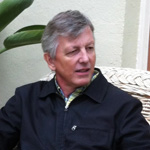

Rolf Ahlers on “What is Philosophy of Religion?”

Ahlers_Rolf

Rolf Ahlers

Rolf Ahlers is the Reynolds Professor of Philosophy and Religion at Russell Sage College. We invited him to answer the question “What is Philosophy of Religion?” as part of our “Philosophers of Religion on Philosophy of Religion” series.

Philosophy of religion is rooted in the absolute and is therefore skeptical of finite knowledge that is internally contradicted as shown by Kant in his antinomy of reason. All religions thrive on that absolute, the negative form of all that is. It is radically different, ab-solved, separate and independent from and therefore not available to finitude, specifically not available to the conceptual grasp; but as its radical negation it is the opposite of irrationalism, namely reason as such. Reason has since the most ancient times also been known as the certainty of pistis=faith. The absolute, unlike finitude, is autarchic, without presuppositions and self-justifying. Finitude requires justification from outside. Justifying itself, the infinite is unshakably certain. It is necessarily one, and free because it is self-causing and the arche, beginning of all.
Continue reading

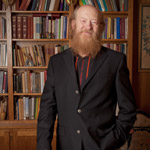
Purushottama Bilimoria on “What is Philosophy of Religion?”

Bilimori_Purushottama

Purushottama Bilimori

Purushottama Bilimori is Honorary Associate Professor of Philosophy at Deakin University, Australia. We invited him to answer the question “What is Philosophy of Religion?” as part of our “Philosophers of Religion on Philosophy of Religion” series.

Philosophy of Religion (PR) undertakes a critical examination of the methods and reasoning behind theologies and arguments in a range of religious traditions. It also examines critical responses to the doctrinaire commitments of religions – from the alternative points-of-view of secularism, science, atheism (or variant nontheism and agnosticism), feminism and postcolonialism. Unlike the study of World Religions, which provides a descriptive account of religious beliefs, PR engages in critiquing, comparing and evaluating religious beliefs, theological doctrines and indeed arguments that are worked up within the respective traditions in defence of these. This helps toward gaining an insight into different typologies and patterns of religious beliefs, theological thinking and metaphysical arguments that ground them as well as their ideological and moral ramifications.

Continue reading

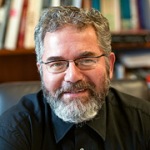
David Baggett on “What is Philosophy of Religion?”

Baggett_David

David Baggett

David Baggett is Professor of Philosophy at Liberty University. We invited him to answer the question “What is Philosophy of Religion?” as part of our “Philosophers of Religion on Philosophy of Religion” series.

The philosophy of religion explores the Big Questions—the questions that philosophy at its best aims to answer. Philosophy should not rest content with merely verbal squabbles, technical debates among specialists, or games of intellectual gymnastics. Whether there’s a God, what God’s like if there is one, whether life persists beyond the grave, what life’s meaning is if one there be—these are the questions that often spur people to pursue the study of philosophy in the first place, and philosophy of religion indulges the chance to explore them.

The questions are engaging even to children, but the difference between a child asking such questions and a philosopher is that the philosopher, in an effort to honor the wide-eyed childlike wonder of it all, has developed tools, strategies, and resources to answer such questions—or at least inch, however incrementally, toward answers. Philosophers do so by refining the questions themselves, ruling out certain answers, defending other answers against objections, revealing how various answers produce yet new questions. In the process they subject various proposals to critical scrutiny every step of the way, separating the wheat from the chaff, in an effort to make progress. It’s exploration predicated on assuming that reason and rationality, properly exercised, make for progress.

Continue reading

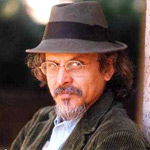
John Schellenberg on “What is Philosophy of Religion?”

Schellenberg_John

John Schellenberg

John Schellenberg is Professor of Philosophy at Mount Saint Vincent University in Canada. We invited him to answer the question “What is Philosophy of Religion?” as part of our “Philosophers of Religion on Philosophy of Religion” series.

In my experience, people unfamiliar with the set of ‘philosophy-ofs’ belonging to contemporary philosophy (philosophy of science, philosophy of art, and so on), in which philosophy of religion is included, easily conflate philosophy of religion with religious philosophy. “So you do religious philosophy,” they say. Or, worse: “So you’re a religious philosopher.” A lot of things can go wrong if you start with religion instead of philosophy.

This is a lesson that even some professional philosophers concerned with religion seem still to be learning. More on that in a moment. For now, let’s put philosophy firmly in the driver’s seat. Philosophy of religion is, first of all, philosophy.

Continue reading

Robert C. Neville on “What is Philosophy of Religion?”

RNeville

Robert C. Neville

Robert C. Neville is Professor of Philosophy, Religion, and Theology at Boston University. We invited him to answer the question “What is Philosophy of Religion?” as part of our “Philosophers of Religion on Philosophy of Religion” series.

Philosophy of religion is best described paradigmatically as philosophy that has something interesting and important to say about religion insofar as it addresses religion. The modern Western instances of Hume, Kant, Hegel, and Whitehead, among others, are paradigmatic. In each case, the philosopher developed a somewhat comprehensive if not systematic philosophy addressing many topics and arising from many motives and out of that philosophy made important contributions to understanding religion. To this list of greats we can add Marx and Nietzsche, who had comprehensive philosophies with negative but influential things to say by way of understanding religion. A number of intellectual projects relative to or derivative from this paradigmatic sense of philosophy of religion also deserve the title and important places in the public conversation that constitutes living philosophy of religion today.

Continue reading

Michael Zank on “What is Philosophy of Religion?”

zank_michael

Michael Zank

Michael Zank is Professor of Religion at Boston University and Acting Director of the Elie Wiesel Center of Judaic Studies. We invited him to answer the question “What is Philosophy of Religion?” as part of our “Philosophers of Religion on Philosophy of Religion” series.

“Philosophy of religion” may well be a contradiction in terms, especially if we follow Leo Strauss’s definition of “philosophy” and “religion” where philosophy always starts from what is at hand, whereas religion starts from obedience to divine command or absolute truth.

But Strauss’s construal of philosophy and religion as opposites does not start from scratch. Instead, it proceeds from a critique of the most eminent modern philosophy of religion, namely, that of Hegel. For Hegel, the philosophy of religion is the manner in which the truth embedded in the history of religions is discovered as the dialectic unfolding of the spirit in historical and symbolic form. To deny that means to make religion and philosophy irreconcilable opposites, without being able to say—on rational grounds—in whose favor to decide. If religion and philosophy cannot be reconciled other than by irrational decision, religion wins, since it is contingent on irrational decision (fideism as first philosophy). But philosophy (and hence: science and the university) is contingent on a decision in favor of reason; in other words: unbelief or, at least, agnosticism.

Continue reading