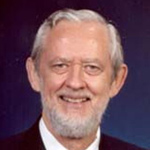

Peter Jonkers on “What is Philosophy of Religion?”

Jonkers_Peter

Peter Jonkers

Peter Jonkers is full professor of philosophy at Tilburg University (the Netherlands). We invited him to answer the question “What is Philosophy of Religion?” as part of our “Philosophers of Religion on Philosophy of Religion” series.

Do you have to be religious in order to be a good philosopher of religion or is a pious heart, by contrast, an obstacle for a philosophical examination of religion? Let me introduce this tricky question through a personal experience. A few years ago, I participated in a conference on Rawls’s ideas about the role of religion in the public sphere. The overall majority of the delegates were political philosophers, presenting excellent papers on religious comprehensive doctrines as expressions of non-public reason, on the fact that these doctrines have to fulfill the ‘proviso’ of using proper political or public reasons (and not reasons given solely by comprehensive doctrines) in order to be introduced in the public political discussion, etc. However, none of them paid any attention to On My Religion, an autobiographical essay in which Rawls explains why he abandoned his orthodox Christian beliefs in spite of the deeply religious temperament that informed his life and writings. Although there is no direct link between his life and his philosophy, this essay sheds an intriguing light on Rawls’s personal struggle in answering the leading question of his Political Liberalism: “How is it possible for those affirming a religious doctrine that is based on religious authority, for example, the Church or the Bible, also to hold a reasonable political conception that supports a just democratic regime?”

With these considerations in mind I asked some of the Rawls-experts at the conference whether they would qualify themselves as religious or perhaps even as Christian. Almost all of them replied that they were not religious, and considered their secular stance as an important or even necessary condition for the unprejudiced, philosophical study of religion. I found this answer rather odd, because it prevents them from understanding the deeper reasons and motives of Rawls’s struggle, which are highly relevant for the understanding of his philosophy.


Continue reading

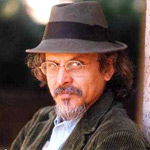
Ronald Kuipers on “What is Philosophy of Religion?”

Kuipers_Ronald

Ronald A. Kuipers

Ronald A. Kuipers is Associate Professor of the Philosophy of Religion, and Director of the Centre for Philosophy, Religion, and Social Ethics at the Institute for Christian Studies in Toronto, Canada. Most recently, he is the author of Critical Faith: Toward a Renewed Understanding of Religious Life and its Public Accountability (Rodopi, 2002), and most recently Richard Rorty (Bloomsbury Contemporary American Thinkers, 2013). We invited him to answer the question “What is Philosophy of Religion?” as part of our “Philosophers of Religion on Philosophy of Religion” series.

For a philosopher with an interdisciplinary bent, there has perhaps never been a more exciting time to make a contribution to the Philosophy of Religion. Workers in this field are becoming increasingly open to a greater range of disciplinary avenues in pursuing their scholarly task. That task, as I understand it, involves reflecting philosophically on religious phenomena in their entirety, taking into consideration more than just the cognitive dimensions of religious belief. While this dimension remains important and undiminished, there is a growing sense among many philosophers of religion that any philosophical reflection on religious phenomena that restricts itself to this arena will remain truncated and incomplete. An adequate philosophical understanding of religion must also attend to its social and public dimensions, and these latter should not simply be left to historians and sociologists of religion alone. It is imperative, therefore, that philosophers of religion stay abreast of contemporary developments in social and political thought, as well as related discussions in the philosophy of language, especially those that highlight the social/discursive dimension of human language use.

Continue reading

William Hart on “What is Philosophy of Religion?”

Hart_William

William D. Hart

William D. Hart is Professor of Religious Studies at University of North Carolina, Greensboro. We invited him to answer the question “What is Philosophy of Religion?” as part of our “Philosophers of Religion on Philosophy of Religion” series.

The philosopher of religion is the ultimate peripatetic: traveling across spacetime, rummaging among the texts, discourses, and performances of various religious traditions that provide grain for an interpretive mill. The philosopher of religion is a provocateur who corrupts youthful, naïve, staid, and common sense notions of what religion is. “Philosophy of religion” is an abstract noun that refers to the concrete work of particular philosophers. Western in provenance—that is, Greek, Roman, and Christian, the philosophy of religion is an old form of what Edward W. Said famously describes as “traveling theory.” In the world of “post” imperial/colonial modernity with its international flows of capital, labor, and culture, where the distance between metropole and periphery has shrank almost to the vanishing point, the wisdom traditions of the east and the global south are challenging and dislocating a western-born philosophy of religion.

Continue reading

Paul Draper on “What is Philosophy of Religion?”

Draper_Paul

Paul Draper

Paul Draper is Professor of Philosophy at Purdue University. We invited him to answer the question “What is Philosophy of Religion?” as part of our “Philosophers of Religion on Philosophy of Religion” series.

The academic study of religion is a tricky business, because religions make claims about reality that are as cherished by their members as they are incredible to non-members. Thus, both philosophy of religion, which is a sub-discipline of philosophy, and the relatively new discipline of religious studies face an important question about their aims. Do those aims include addressing the truth question – the question of whether any of the claims about reality that religions make are true? On the one hand, inquiry in religious studies has generally avoided this question, especially in the United States, where great effort has been made to distinguish the secular and “scientific” discipline of religious studies, which is properly taught in public universities, from the sectarian discipline of theology, which is taught only in private religious institutions and which, at least historically, sought not just to identify, clarify, and systematize the beliefs of a particular religious community (dogmatics), but also to justify them (apologetics). Philosophy of religion, on the other hand, can’t completely ignore the truth question and still be philosophy. This is not to say that the truth question is the only question philosophers of religion should address, but it is one such question, and thus it is worth asking how this one part of philosophy of religion is best approached. I offer four recommendations.

Continue reading

Gordon Graham on “What is Philosophy of Religion?”

Graham_Gordon

Gordon Graham

Gordon Graham is Henry Luce III Professor of Philosophy and the Arts at Princeton Theological Seminary. We invited him to answer the question “What is Philosophy of Religion?” as part of our “Philosophers of Religion on Philosophy of Religion” series.

Philosophy of religion has for several decades been thought identical with philosophical theology – brilliantly revitalized by a host of very able philosophers, most notably perhaps, Richard Swinburne and Alvin Plantinga. Before the publication of Swinburne’s Existence of God, and Plantinga’s God and Other Minds, philosophy of religion was largely in the doldrums. Metaphysical questions had been abandoned, and the subject was for the most part confined, (as moral and political philosophy were for a time), to the application of philosophy of language to religion. A few decades later, however, the subject had been transformed. It now has substantial metaphysical and theological content. The number of both prominent and promising philosophers engaged in it continues to grow, and they have produced innumerable very high quality books and journal articles.

There is, however, a different kind of philosophy of religion. This alternative is not incompatible with the traditional arguments of philosophical theology, or indifferent to the philosophical exploration of divine attributes, and it relates to the science/religion debate, if somewhat obliquely. Its principal aim, though, is neither to sustain nor to undermine the rational foundations of religious belief, but to arrive at a philosophical understanding of religion as a human phenomenon. It is, in other words, ‘philosophy of religion’ properly so called, rather than theistic metaphysics.

Continue reading

Matthew Davidson on “What is Philosophy of Religion?”

Davidson_Matthew

Matthew Davidson

Matthew Davidson is Professor of Philosophy at California State University, San Bernadino. We invited him to answer the question “What is Philosophy of Religion?” as part of our “Philosophers of Religion on Philosophy of Religion” series.

This is a difficult question to answer for the same sorts of reasons it is difficult to say what philosophy itself is. First, there is disagreement not only at the margins, but as to the very nature of the discipline; and second, even among like-minded practitioners of the discipline, it still is difficult to give anything approaching an analysis (that would look like a Chisholm-style definition) of the nature of philosophy of religion. (Indeed, it is hard to give an analysis of the nature of all sorts of important things.)

Continue reading

Rem Edwards on “What is Philosophy of Religion?”

Edwards_Rem

Rem Edwards

Rem Edwards is the Lindsay Young Professor of Philosophy Emeritus at the University of Tennessee. We invited him to answer the question “What is Philosophy of Religion?” as part of our “Philosophers of Religion on Philosophy of Religion” series.

Anyone attempting to answer this question inevitably expresses his or her own approach to it, interests in it, and limited perspective on it, so I will try to be as forthright as possible about my own involvements. No one can give a complete and definitive answer to it, so my own efforts make no such pretensions. Many different interests and concerns guide philosophers of religion. My own have been passionate curiosity and quests for true beliefs and defensible values and practices, spread over the whole of philosophy, and not limited to the philosophy of religion. The whole enterprise must be qualified from the outset by a fallibilism which recognizes that after we have done our best, not all competent rational authorities will agree. Philosophers are no more agreed than theologians about what philosophy (or revelation) authorizes us to believe, practice, and value; so personal perspectivism and commitment are inevitable and inescapable in all of philosophy and theology.

Continue reading

Donald A. Crosby on “What Is Philosophy of Religion?”

Crosby_Donald

Donald Crosby

Donald Crosby is Professor of Philosophy Emeritus at Colorado State University. We invited him to answer the question “What is Philosophy of Religion?” as part of our “Philosophers of Religion on Philosophy of Religion” series.

“What does your dad do?” This question was raised by a friend of my younger daughter when the friend was talking with her on the telephone. My daughter said, “He teaches philosophy at the state university.” The friend then raised an obvious question: “What’s philosophy?” “I don’t really know,” said my daughter. “I’ll ask my dad.” I had no ready terse answer to this difficult and much debated question, so I replied, “Thinking deeply about deep questions.” Philosophers have no corner on such questions, of course, but one class of questions they have addressed over the ages is the class of deeply probing religious questions—questions relating to religious outlooks, expressions, arguments, and practices. When philosophers address these questions, they are called philosophers of religion.

Continue reading

Rolf Ahlers on “What is Philosophy of Religion?”

Ahlers_Rolf

Rolf Ahlers

Rolf Ahlers is the Reynolds Professor of Philosophy and Religion at Russell Sage College. We invited him to answer the question “What is Philosophy of Religion?” as part of our “Philosophers of Religion on Philosophy of Religion” series.

Philosophy of religion is rooted in the absolute and is therefore skeptical of finite knowledge that is internally contradicted as shown by Kant in his antinomy of reason. All religions thrive on that absolute, the negative form of all that is. It is radically different, ab-solved, separate and independent from and therefore not available to finitude, specifically not available to the conceptual grasp; but as its radical negation it is the opposite of irrationalism, namely reason as such. Reason has since the most ancient times also been known as the certainty of pistis=faith. The absolute, unlike finitude, is autarchic, without presuppositions and self-justifying. Finitude requires justification from outside. Justifying itself, the infinite is unshakably certain. It is necessarily one, and free because it is self-causing and the arche, beginning of all.

Continue reading

Purushottama Bilimoria on “What is Philosophy of Religion?”

Bilimori_Purushottama

Purushottama Bilimori

Purushottama Bilimori is Honorary Associate Professor of Philosophy at Deakin University, Australia. We invited him to answer the question “What is Philosophy of Religion?” as part of our “Philosophers of Religion on Philosophy of Religion” series.

Philosophy of Religion (PR) undertakes a critical examination of the methods and reasoning behind theologies and arguments in a range of religious traditions. It also examines critical responses to the doctrinaire commitments of religions – from the alternative points-of-view of secularism, science, atheism (or variant nontheism and agnosticism), feminism and postcolonialism. Unlike the study of World Religions, which provides a descriptive account of religious beliefs, PR engages in critiquing, comparing and evaluating religious beliefs, theological doctrines and indeed arguments that are worked up within the respective traditions in defence of these. This helps toward gaining an insight into different typologies and patterns of religious beliefs, theological thinking and metaphysical arguments that ground them as well as their ideological and moral ramifications.

Continue reading